Puppy Problems

As the world is stuck in lockdown due to the coronavirus pandemic many people are trying to find ways to entertain themselves while at home. I’ve seen so many people on social media posting about the new puppies they’ve gotten while in quarantine to keep them occupied. I mean hey, they can work as a therapy pets too to keep the quarantine blues and anxieties down. But it’s important to be careful when picking out a new fur baby. The CDC has reported an outbreak of multidrug-resistant Campylobacter jejuni infections in 13 states linked to puppies purchased from pet stores. How’s that for some extra rain on your parade?

Many people infected with Campylobacter jejuni experience some pretty awful abdominal symptoms including bloody diarrhea, stomach cramps, and fever around 2-5 days after being exposed. Some illnesses are severe enough to warrant hospitalization of the infected individual. But the good news is that symptoms usually only last a week and will go away on their own without antibiotic treatment so they’ll be able to play with your puppy in no time, seeing as the puppy usually won’t develop symptoms. I’m sure those super cute puppy eyes will make up for the hours spent on the toilet though, at least I hope they can see it that way eventually. Ya know, I’ve always been a big fan of kittens.

According to the Microbiology Society,  C. jejuni is accepted to be the most common cause of gastroenteritis around the world. It’s usually a foodborne disease which means it’s spread through the fecal-oral route. So in regards to the puppies, it is extremely important to be cautious and sanitary when cleaning up those super cute puppy accidents to reduce your risk of contracting an infection. Although it’s pretty rare, there is a possibility of developing sequelae like Guillain-Barré syndrome (a paralytic autoimmune disorder). So be very very cautious and use that aseptic technique. Meanwhile, I’ll just be here perfectly content with my cat 🙂
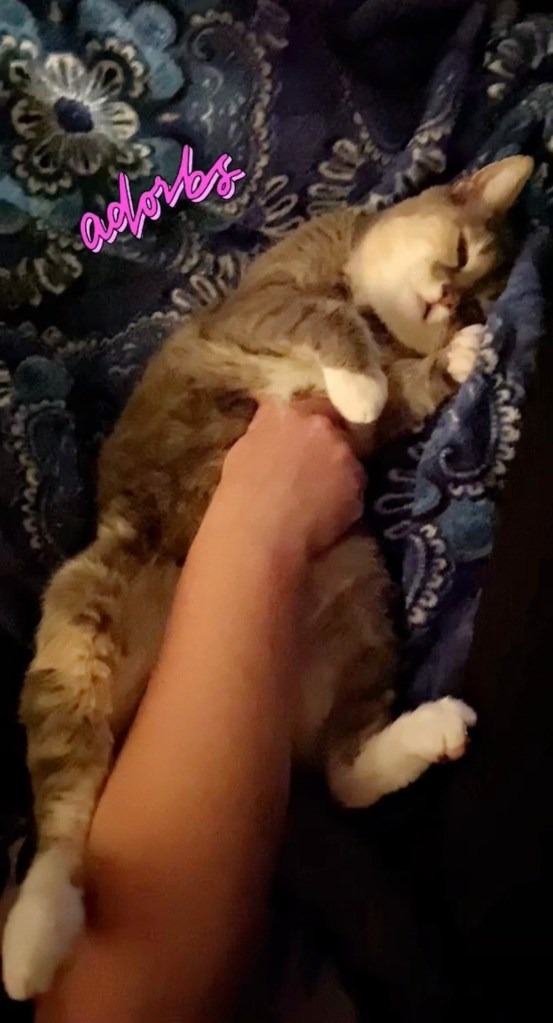

the sweetest thing ever but I’m biased

infliximab (Remicade)

Infliximab (Remicade) is a monoclonal antibody used to treat chronic inflammatory diseases. As stated in Mednet and many other sources, monoclonal antibodies are man-made substances used to fight proteins that mistakenly attack normal tissues. When these proteins are left unabated to attack healthy cells, autoimmune disorders can emerge. Infliximab (Remicade) binds and blocks a protein called tumor necrosis factor alpha (TNF-alpha) – that regulates and promotes inflammation in the body – from reaching its target receptors. In chronic inflammatory diseases, the body produces too much TNF-alpha, causing the body to attack normal cells in the digestive tract and unnecessary inflammation. Blocking TNF will reduce inflammation and the problems and symptoms associated with its excess such as abdominal pain, fatigue, and diarrhea.

Possible side effects of taking infliximab (Remicade) include:

  • respiratory infections, such as sinus infections and sore throat 
  • headache
  • coughing
  • stomach pain

These side effects result from the fact that in order to treat the chronic inflammation caused by overstimulation of the immune system, the immune system is now hampered and may struggle to combat normal everyday infections.

Infusion reactions can occur up to two hours after injection of the drug which include:

  • respiratory infections, such as sinus infections and sore throat 
  • headache
  • coughing
  • stomach pain
  • shortness of breath

Infusion reactions are due to agents in the drug that may cause an acute cytokine release. These symptoms usually go away completely within 24 hours of the infusion.

This drug can also make you more susceptible to other diseases and infections due to the fact that it negatively inhibits your innate immune system and affects your body’s ability to fight infections – particularly it’s ability to mount an inflammatory response. Serious infections from bacteria, fungi, and viruses have occurred and can be fatal. Many cancers have been reported in people taking infliximab (Remicade) along with liver injury, blood and nervous system problems, and allergic reactions. This drug is usually taken when other methods and immunotherapies were unsuccessful, as it does come with high risks. Infliximab (Remicade) has to be administered through an IV drip by a health care professional forcing patients to visit the hospital or doctors office once every 8 weeks.

According to an article by the Archives of Medical Science, TNF was only recently characterized around 30 years ago. This means we’re looking at pretty new medicine that doesn’t have all of the kinks worked out. TNF inhibitors currently have a lack of ligand selectivity and this may be the reason or all of the severe side effects. If we could make it specific for the type of receptor associated with chronic inflammatory diseases we could make it less of a hindrance on the overall immune system. But, so far this is the best we have to work with and it has been found that many of the successes outweigh the possible consequences. It be what it be.

Fearing COVID-19

COVID-19 is not only hurting its own victims but also patients without the virus. I believe we’ll see a trend of unrelated deaths increase because treatment may now be unavailable to those who wish to seek it and those who do may be fearful of hospitals right now. An article by CNN states that many health care workers have canceled elective procedures and appointments and closed non-emergency doctors offices. The idea was good in theory, to keep all non essential people away from the virus to reduce exposure and infection; but now people are not receiving the care they need. Many hospitals are not at capacity and have open beds due to the decrease in their usual patients. Some surgeries may be elective now, but if patients are forced to wait they can turn into emergencies.

Patients with cancer and diseases that require long-term care are some example of unrelated COVID-19 cases that are being neglected. Many need to receive treatments in hospitals to keep their symptoms at bay or fight the disease. For example, if a patient was advised to get potentially cancerous tissue removed they are now unable to, as its classified as elective, even though waiting for treatment could lead to the development of cancer. There is also now a gap in care where we’re missing preventative screenings. Women may choose not to get mammograms to check for breast cancer, risking missing an early diagnosis if they do have it.

An article by the New York Times discuses how health care professionals are worried about where all the heart attack and stroke patients have gone, because they’re not in the hospitals. According to hospitals in the US and around the world it appears that many of the emergencies have disappeared. But I don’t believe this can actually be the case. I believe many are choosing to suffer at home instead of receiving care immediately because of fear of the coronavirus in hospitals. It is often with heart attack patients that care in later stages is less likely to be life saving. Which is extremely sad in the wake of COVID-19. So my message to y’all at home is to go to the hospital if you need it and if it is available to you! Primary care is necessary, that’s why we do it regularly and are healthier as a population because of it. Stay safe and healthy y’all.

Testing COVID-19

I feel like people don’t take COVID-19 seriously until they’ve been tested and are proven to be infected. So having tests for the public can help slow the curve and people might actually stay the freak at home. But also, tests are necessary for identifying which patients are infected and which have something else that is treatable.

Currently, according to Medical News Today, there are two different types of tests to determine COVID-19 infection and exposure: molecular and serological. The molecular test involves taking a respiratory sample from the back of the throat to test for an active infection. The sample is put through a Polymerase Chain Reaction process that looks for signs of viral genetic information. These are the tests most people have undergone when they say they “tested positive” or “tested negative” for COVID-19. However, a drawback of this test is that it can only determine active infections, it can not determine if someone had the virus at one point and has now recovered. In order to determine that, we need to administer the serological test to look for antibodies. Antibodies are microscopic offensive substances our bodies produce to neutralize invaders, ie. the rona. If someone has antibodies specific to COVID-19 it means they have been exposed to, are an asymptomatic carrier for, or have an active infection of COVID-19. Antibodies are super important for the immune response and future responses to the same disease. Vaccines work by eliciting an immune response within our bodies that produce antibodies, then when we are exposed to the vaccine in the environment the antibodies are already present and know what to do.

As your body responds to a pathogen, your antibodies become better at fighting it in a process called affinity maturation. They may switch from a class IgM titer to a class IgG as they get more and more specific, as stated in a New York Times article. If someone undergoes the serological test and it determines that they have only IgM antibody titers, this means they have been infected with the pathogen for five days or less. After five days of a primary response your antibodies class switch and begin making IgG antibodies. You will have both IgM and IgG in your blood until the pathogen is no longer a threat. Once your body has fought off the infection you will primarily only have IgG titers in your blood, a sign that you are capable of eliciting a quicker secondary response if the pathogen is encountered again. This is very beneficial because when exposed the second time, your body will fight it off so quick you wouldn’t even know u were infected. Ya got immunity. Take that COVID-19.

COVID-19 be like ^

If we could determine who was IgG positive to a certain degree, we would know who has been exposed to the virus, recovered, and is now immune. Having enough IgG titers would keep COVID-19 from establishing a productive infection and keep people from being contagious. If we can determine who is now immune we could start sending people back to work and businesses could reopen! I could actually get to celebrate my birthday properly!

Curing COVID-19

A rona update: but this time there’s talk about vaccines 🙂

A phase one clinical trial based in Seattle has begun testing an investigational vaccine using mRNA as stated by the National Institutes of Health. This trial was able to happen so fast because scientists were already working on a vaccine to treat MERS, a disease also caused by coronaviruses located in the Middle East. They were able to quickly select a genetic sequence that causes a cell to display a viral protein spike recognizable by the immune system. Study participants receive two doses of the vaccine through an intramuscular injection in the upper arm. This means the vaccine would have to be administered by health care professionals.

A different approach by researchers at the University of Pittsburgh uses a patch, rather than a needle, to deliver the spike protein to the cells and elicit an immune reaction. This technique still utilizes the mRNA sequence to alert immune cells to react. What’s different is that the patch has 400 micro-needles made of sugar and protein, instead of one large needle. It would be applied like a Band-Aid and the needles would dissolve into the skin. This method of administration makes for much quicker and efficient widespread use, which is extremely necessary when dealing with a fast spreading pandemic.

Vaccines prepare the body to fight off infections and symptoms can be less dramatic or even nonexistent. This is extremely important with fighting a pandemic. Right now we need to keep “the curve” under levels that are manageable by our health care system, that is why we’re social distancing and I won’t be allowed back on campus until the fall. Am I still upset? Yes. But that’s beside the point. If the vaccine drastically reduces symptoms we’ll see far less hospitalizations and things can start back on the journey to returning to normal. I just hope the vaccine rolls out to the public in time. If it takes another 2 years for it to be released its likely that everyone left may have already been exposed to it or recovered from it, rendering the vaccine useless. But until then, can y’all stay the freak at home so I can go back to school in the fall? The peak has yet to be reached and we’re expecting a second outbreak. They very well might call off school again and it’ll be another semester at zoom university. I’ll cry. Stay home pleaseeeeeee.

Adoptive Cell Therapy

Modern science is continually evolving and making great strides in patient care. On the blog today we’re discussing a relatively new idea called adoptive cell therapy that has been changing the outlook for cancer patients. Did you know that everyone makes cancerous cells everyday? But, our immune systems recognizes the cancerous cells and does its job to destroy them. In a cancer patient, something goes wrong along the line and they are unable to destroy them and the cells are left unsupervised to proliferate out of control, causing tumors and cancerous tissues. Adoptive cell therapy, also known as cellular immunotherapy, is an approach to assist and enhance our already existing immune cells.

According to the Cancer Research Institute, “engineered TCR therapy” is one of the approaches being used. It works by equipping their existing T cells with new receptors that enable them to recognize and target specific cancer antigens. We’re developing personalized medicine people! I think it’s kinda crazy how science has evolved to the point where we can change a tiny tiny T cell receptor on one cell to fight the giant, aka cancer, that’s taken so many lives. Once we add that TCR to the T cell we can reinsert it into the body where it’ll proliferate and make its own entire army of clones to kill the cancerous cells. Then we can sit back (metaphorically) and let our immune system do its job.

The whole process lasts about 3 weeks, as claimed and discussed in an article from the Peking University Shenzhen Graduate School in Shenzhen, China. But I don’t mean that you’ll be cured in 3 weeks, just that after 3 weeks you’ll have the engineered T cells circulating in your body. The process is relatively straight forward. First scientists isolate T cells from the patient. Then, they are modified and stimulated outside the body by cytokines to proliferate and make an army. Lastly, the T cells are transfused back into the patient and they’re monitored for the following few days. But it’s not all rainbows and sunshine. 😦 Some pretreatment with chemotherapy must be done to promote the recovery and proliferation of immune cells, which has it’s own symptoms. There are also other possible risks associated with treatment such as Cytokine Release Syndrome (CRS)- which can cause long-term fever, hypotension, dyspnea, and organ problems- and neurotoxicity whose common symptoms include decreased consciousness, confusion, seizures, and brain edema. Currently, TCR therapies are very expensive, ringing in at about half a million dollars.

Now, I know that currently the risks and costs are very high, but these are very new approaches to curing cancer. We couldn’t have expected it to be a breeze. But the hope is that eventually scientists will be able to work out the kinks and personalized medicine will be a common occurrence, and one that is less risky than traditional general methods. Small steps in the right direction are better than no steps. We will win the fight someday.

International TB Day!

Let’s raise some awareness folks

It seems that COVID-19 is out competing TB for attention. World TB day was March 24th and it didn’t get a very big acknowledgement. I didn’t see anything on the media about the disease that’s killed more than COVID-19 and continues to be a growing issue, even if it appears to be a thing of the past in the US. Worldwide, TB is one of the top 10 leading causes of death even though it is curable and preventable. This just increases the importance of raising awareness of this disease.

But the good news is that scientists have not forgotten about TB even if the mainstream media has. According to SLAC National Accelerator Laboratory researchers have discovered a huge pocket in a transporter protein that’s important in the development of TB, something that has never been seen before. New findings like this are always exciting in the scientific world because the better we get to know this disease the closer we are to beating it. This newly discovered pocket could be the key in discovering how Mycobacterium tuberculosis takes up B12, a crucial vitamin for its survival. Now, the bigger mystery is how scientists can use this information to combat the disease from the inside out.

The newly discovered larger pocket in the TB transporter protein.

The WHO is tackling TB with all-inclusive approach, acknowledging the fact that the reason TB has not yet been eliminated is not because it’s impossible, but because there is a lack of attention to it. The “social determinants of health” are evident for a disease like TB, it is a disease of poverty and is linked to poor nutrition and living conditions. TB diagnoses, medications, and awareness has yet to reach the most at risk people. The WHO believes quicker and more readily available diagnoses are more beneficial to stopping TB due to its increasing drug resistance. We are able to cure TB, so we just need to get the right drugs and supplies to the areas of people who are being missed, and there are hotspots in every country, even the rich ones.

Dontcrydontcrydontcrydontcryyyyyyy

So we’re living at home with our parents again! Love that! Freshman year ended 2 months too soon and I definitely wasn’t ready. I feel cheated, ripped off. I feel like I was finally getting my groove in college after a really rough first semester. I was putting all the lessons I’d learned into practice. I was finally seeing friendships blossom that I’ve been intentional about for the past seven months. I was finally not feeling as sad about leaving my (literally) lifelong friendships from home behind. I was learning how to grow where I’d been planted, and then a pandemic comes and rips the world apart and now I feel like I’m back to square one. Back to dodging all the boys from home that I had happily left behind. Back to not being able to go somewhere without my parents knowing. Back to not going to parties. BUT it’s actually worse than how it was before I left because now I’m not even able to have sleepovers, or go to the mall, or grab coffee with my lifelong best friends. If I could be reunited with them after being split across the state for so long maybe that would make it better. But no. Instead I’ve been trapped inside my house for the past week with parents who are working all the time and a brother who doesn’t speak to me.

Can I just say that online school from your bed may sound fun for a couple days or so, but I’m starting to go insaneeeeee. I feel like all I do is stare at a screen all day. I don’t think I’ll ever complain about having to go to class again after this. It’s been very difficult to find a routine without having to be places at certain times. I realize now that I’ve taken for granted having closeness and intimacy with others. I went from being surrounded by people literally 24/7, even when I slept, to being isolated in my house with no one to talk to. Oh how I miss hugging my friends, going shopping at the mall, or sitting down at a coffee shop to do my work.

We’re really out here just doing all of the hard parts of college without any of the fun.

To do our part to help slow the spread of the crisis my family and I have been staying inside most days to the point where going to the grocery store is a big event. We’ve also been trying to support local businesses by ordering lots of take-out and delivery. If we go to the grocery store we bring hand sanitizer in with us. And lord help me if my mom accusingly asks me one more time if I washed my hands as soon as I walk in the door. We did go on a hike one day… but apparently that was everyone else’s idea too. So much for social distancing.

You can see how my dad and I are passing the time on Tik Tok here 🙂

All in all I feel like this is definitely not the world as I knew it. Straight up not having a good time.

But hey, at least the memes are good.

Covid-19 Crisis Continues

Covid-19 began its journey in a seafood and poultry market in Wuhan, China and quickly became an epidemic, and it won’t be long before it grows into a pandemic. According to the New York Times, the disease has been detected in at least 76 countries and that number is likely to grow. In the United States, there have been 118 cases as of Tuesday evening, and 9 of those cases resulted in death, despite having no known connection to previous cases. This suggests the virus can be spread locally by person to person contact or through fomites. Also, an update is that the recent incidence of disease outside of China has surpassed that of the incidence within China; although China still remains the winning country with the highest prevalence of Covid-19. The disease has sickened about 93,100 people according to official counts. That’s slightly more than the total populations of Chapel Hill and Carrboro combined.

If you’re still considering traveling for spring break, I’d like you to take 10 seconds right now to reconsider that decision…. mhm…. keep thinking. Aaaaaaaaaand what did you come up with? Still think that trip to Europe is a good idea? Still think that passing through an airport where people from all over the world come through is a good idea? Well, I think not. I think we may have a real serious problem with Covid-19 in our local cities and towns after spring break. We might kinda all be screwed. People may come back from their vacation and unknowingly have coronavirus, as the incubation period can be two weeks long. They may feel perfectly fine, but what they just did is contaminate everything or anyone they touched, who may then get on another flight and take the disease back home. It’ll be exactly like that game “Plague Inc.”, which I would highly recommend playing while waiting for your layover at the airport. Here’s a picture for reference.

All of the lines represent cross country flights that carry a virus to a new location. Lovely.

Current information from reliable sources, like the Australian Government Department of Health, have concluded there is no real benefit to wearing a surgical mask if you are well. They’re only helpful in preventing the spread of disease from those who are already infected. So, if “the rona” comes to your area, don’t freak out and raid all the drug stores looking for a mask, because it won’t help you. Leave them for the people who are actually sick so we can prevent the spread of the disease. The most effective and proactive thing you can do to prevent yourself from infection with Covid-19 is to WASH YOUR HANDS AND NOT TOUCH YOUR FACE. And I don’t mean the quick hand wash you do after you’ve peed for the fourth time in an hour ’cause you drank a whole medium coffee like it was water. Honestly, I get tired of peeing and having to washing my hands so much. BUT, in the shadow of coronavirus, I stand there for 20 seconds and sing happy birthday twice to make sure I got all the germs off my hands that stuck themselves there in the 10 minutes since I last used the restroom. You can do it too!

Chlamydia trachomatis

aka “the clam”

Chlamydia is one of the most common sexually transmitted diseases and many who have it are not even aware because it largely goes undiagnosed. It is usually presents asymptomatically so you could have it for years and never even know it. This is particularly dangerous because chlamydia can cause serious complications involving fertility later on if left untreated. As medlineplus.org discusses, transmission can occur if you have oral, vaginal, or anal sex with someone who has the infection. Young women (25 and younger) are more susceptible to the infection and have more serious consequences from it than males. In women an untreated infection can lead to pelvic inflammatory disease (PID) which can cause long term pelvic pain, infertility, and ectopic and preterm pregnancies. While on the other hand, men don’t often have health complications from chlamydia, sometimes it can cause epididymitis which has a rare possibility of affecting fertility.

Because chlamydia is a bacterial infection there are antibiotic treatments to treat it. Yay! But, just because you’ve been treated for it once does not mean that you are now superman/woman and can’t get it again. Having it once actually makes you more susceptible for recurring infections. It’s suggested that young people get checked for it once a year if they’re sexually active. And by young people we mean people around the age of their 20s, which means college students. So if you’re sexually active and reading this you should probably be getting checked for it once a year. The more ya know, how bout that? Don’t get crushed by the clam, get tested.

Currently the only sure way to prevent infection with chlamydia is to abstain from vaginal, anal, or oral sex. Using a condom properly reduces your risk but does not eliminate the risk of getting “the clam”. Although, some exciting news is that scientists are currently working on a potential vaccine for the bacterial infection. There are many attempts being developed because chlamydia is a big problem worldwide. An article from The Journal of Infectious Diseases discusses one attempt in which a they got a recombinant major outer membrane protein (rMOMP) vaccine to elicit cross-serogroup protection in mice. The results of this study prove it to the first subunit vaccine to protect mice against infection, pathology, and infertility caused C. trachomatis serovars. This research is super awesome because we are that much closer to cultivating a vaccine effective in humans! Its gonna take a while but there’s hope! Think of all the preterm infant deaths we could prevent with a vaccine for chlamydia! How many women would not have to be crushed with the news that they are infertile?